What Is a Truck Crown Wheel and Pinion?
Gear Ratio and Why It Matters
The ratio between the two gears determines how many driveshaft rotations produce one full axle revolution. A 4.88:1 ratio delivers greater torque multiplication, which suits heavily loaded trucks and demanding terrain. A 3.42:1 ratio favors fuel efficiency and is better suited to sustained highway operation. Selecting the wrong ratio affects engine RPM at cruise speed, fuel consumption, and overall drivetrain performance in ways that compound over every mile driven.
Why Crown Wheel and Pinion Quality Matters
Material and Heat Treatment
Case hardening depth and surface hardness must fall within tightly controlled ranges. Too shallow a case wears through quickly under heavy contact stress. Too deep a case removes the tough core and increases the risk of tooth fracture under shock loading. A reputable manufacturer measures and documents these values for every production batch, and a buyer should expect to receive that documentation upon request.
Surface Finish and Tooth Geometry
Gear sets that skip grinding or lapping in favor of faster production cycles may measure within tolerance on paper but produce elevated noise levels and uneven contact patterns in service. Over time, the high contact pressure on the rough surface peaks accelerates wear in a way that a well-finished gear set avoids.
Key Specifications You Must Confirm Before Ordering
Specifications at a Glance
| Specification | Why It Matters |
|---|---|
|
Axle model and manufacturer |
Gear sets are not interchangeable between axle families |
|
Gear ratio |
Affects performance, fuel economy, and top speed |
|
Tooth count |
Verifies ratio and confirms true compatibility |
|
Hand of spiral |
Left or right hand must match exactly; wrong hand = unusable part |
|
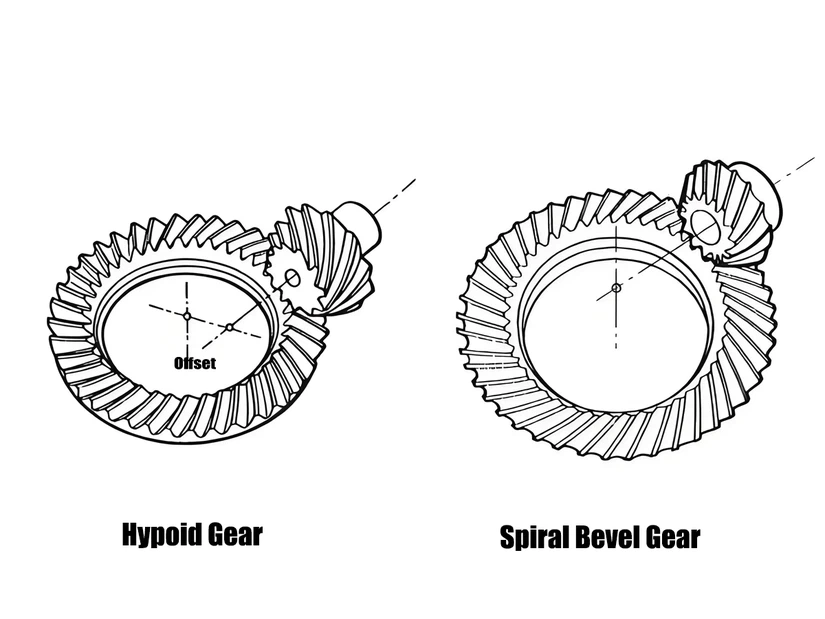
Hypoid offset |
Must match the axle housing geometry precisely |
|
Material certification |
Confirms alloy composition and heat treatment compliance |
The axle model and manufacturer establish which gear family applies. Major manufacturers including Meritor, Dana Spicer, Eaton, and ZF each produce multiple axle families with different bearing arrangements, carrier designs, and gear mounting configurations. Parts engineered for one family cannot simply be fitted to another.
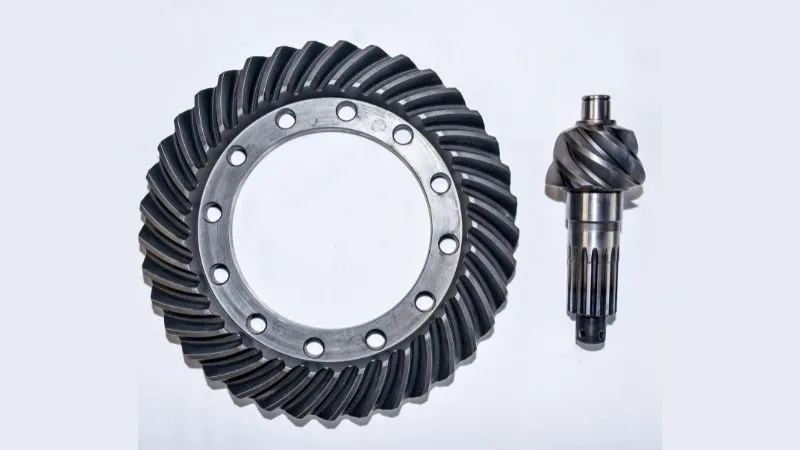
The hand of spiral is a specification that catches buyers off guard more often than any other. Spiral bevel and hypoid gears have teeth that curve in either a left-hand or right-hand direction, and this direction must match the original exactly. A gear supplied in the wrong hand will physically fit the axle housing but cannot mesh with the pinion. Always confirm this specification explicitly with the supplier before ordering.
Material certification is worth requesting even when sourcing from established suppliers. A certificate confirming the alloy grade and heat treatment parameters gives buyers documented assurance that the gear set meets the application’s engineering requirements, and provides a reference point if a warranty or failure investigation is ever needed.
Signs of Wear or Failure
Warning Signs to Watch For
Whining or humming from the rear axle that changes pitch with vehicle speed is typically the earliest audible sign of gear or bearing wear. Unlike tire noise, it persists when coasting with the clutch disengaged.
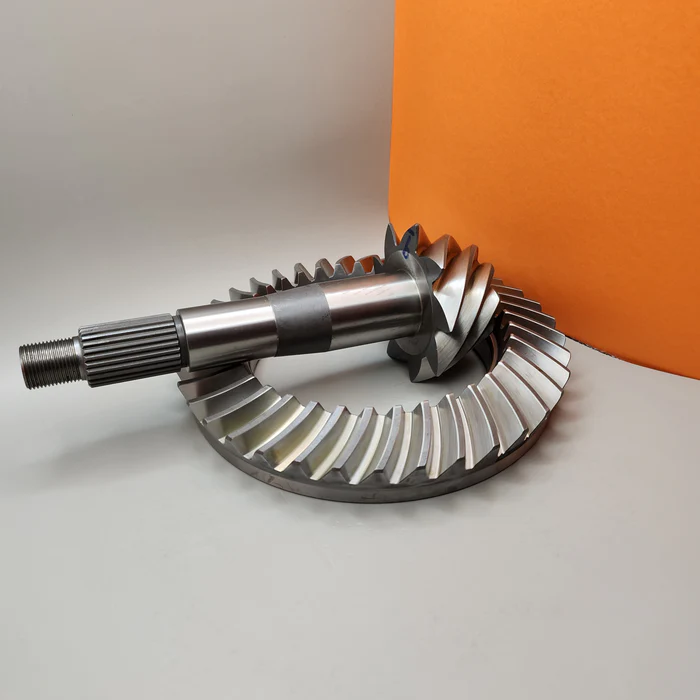
Clunking when pulling away from a stop or shifting into reverse indicates that backlash has grown beyond its designed range as the gear teeth have worn down. The impact when the gears re-engage under load produces a knock that becomes more pronounced as wear continues.
Metal particles on the axle drain plug during oil changes are a reliable internal indicator. Fine metallic dust is a normal byproduct of gear operation. Chips, flakes, or a heavy accumulation of particles signal abnormal wear that requires immediate attention.
Oil leaks from axle seals, while not directly caused by the gear set, deprive the gears and bearings of lubrication and accelerate wear faster than almost any operating condition.
Best Practices for Installation and Setup
Replace carrier and pinion bearings at the same time as the gear set. The incremental cost of the bearings is minor relative to the labor involved. Installing a new gear set on worn bearings undermines the entire job.
Set pinion depth using shims behind the inner pinion bearing to position the gear teeth correctly against the crown wheel face. Measure backlash at multiple points around the crown wheel circumference with a dial indicator and adjust within the manufacturer’s specified range.
Verify the contact pattern by applying marking compound to the crown wheel teeth and rotating the assembly under light load. A correct pattern sits centrally on the tooth face. Patterns concentrated at the toe, heel, top, or root of the tooth indicate that further shim adjustments are required. This step reveals problems that no measurement alone can detect, and skipping it is the single most common cause of premature gear failure after installation.
How to Choose the Right Supplier
A reliable gear manufacturer provides material certifications, documented heat treatment records, and clear specifications for every product they sell. Manufacturing capability matters: hobbing, grinding, and lapping are the processes that distinguish precision gear producers from lower-quality alternatives. For buyers sourcing in volume, the ability to supply custom ratios or non-standard specifications adds significant practical value. Responsive technical support for application and compatibility questions is an equally important differentiator.
Common Mistakes Buyers Should Avoid
Ordering by unit price alone consistently produces higher total costs once premature failure, labor, and downtime are factored in. Total cost of ownership is the right metric for this decision.
Replacing only the failed gear instead of the matched pair means a new gear must mesh against a worn partner with a contact pattern it was never designed to match. Both components wear faster as a result.
Skipping the contact pattern check during installation is the shortcut most likely to result in a repeat repair. No measurement substitutes for visual confirmation that the gears are contacting correctly.
Sourcing without requesting material documentation leaves the buyer with no objective way to verify alloy composition or heat treatment quality. The surface appearance of a gear reveals nothing about its metallurgical integrity.
Final Thoughts
The crown wheel and pinion is a component where quality, specification accuracy, and installation discipline all directly translate into service life. Confirming the right specifications before ordering, sourcing from a manufacturer with documented quality processes, and ensuring the gear set is set up correctly are the three factors that determine whether a repair holds up or comes back.
At XJXPARTS, we manufacture crown wheel and pinion sets directly from our factory, with custom specifications available for non-standard applications. If you have sourcing questions or want to discuss your specific requirements, feel free to contact us anytime.