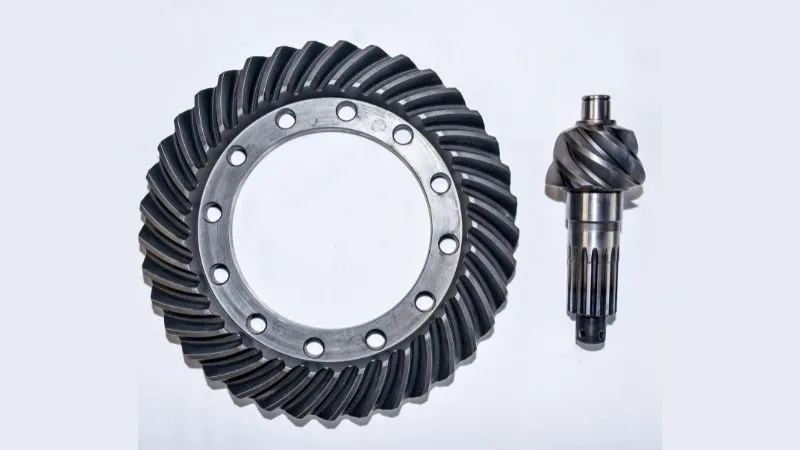
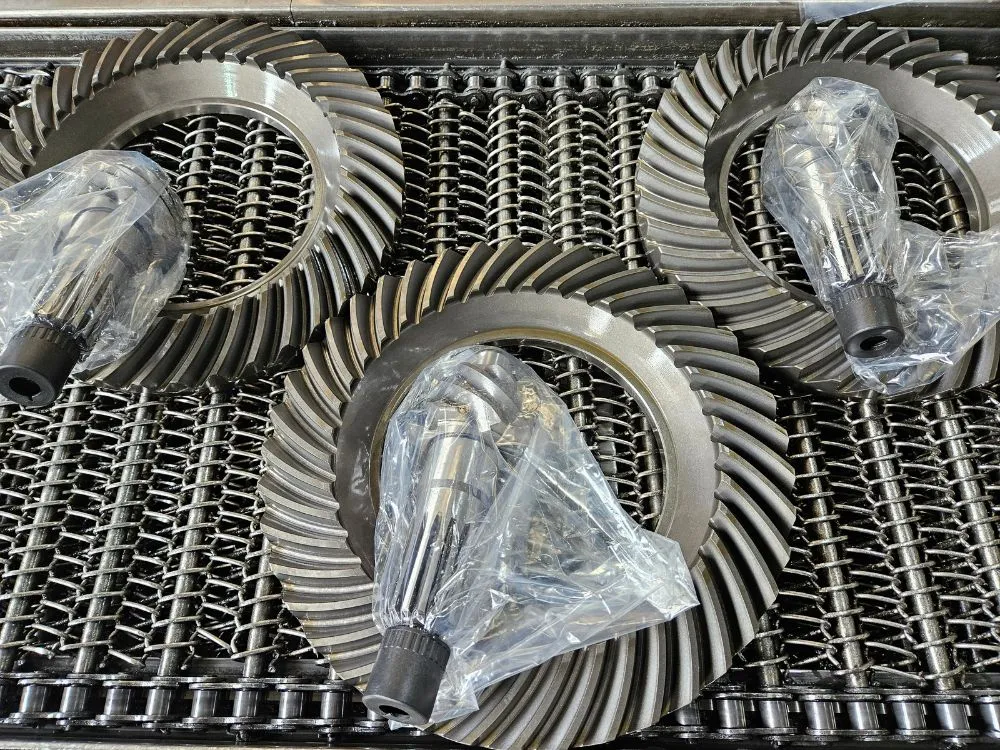
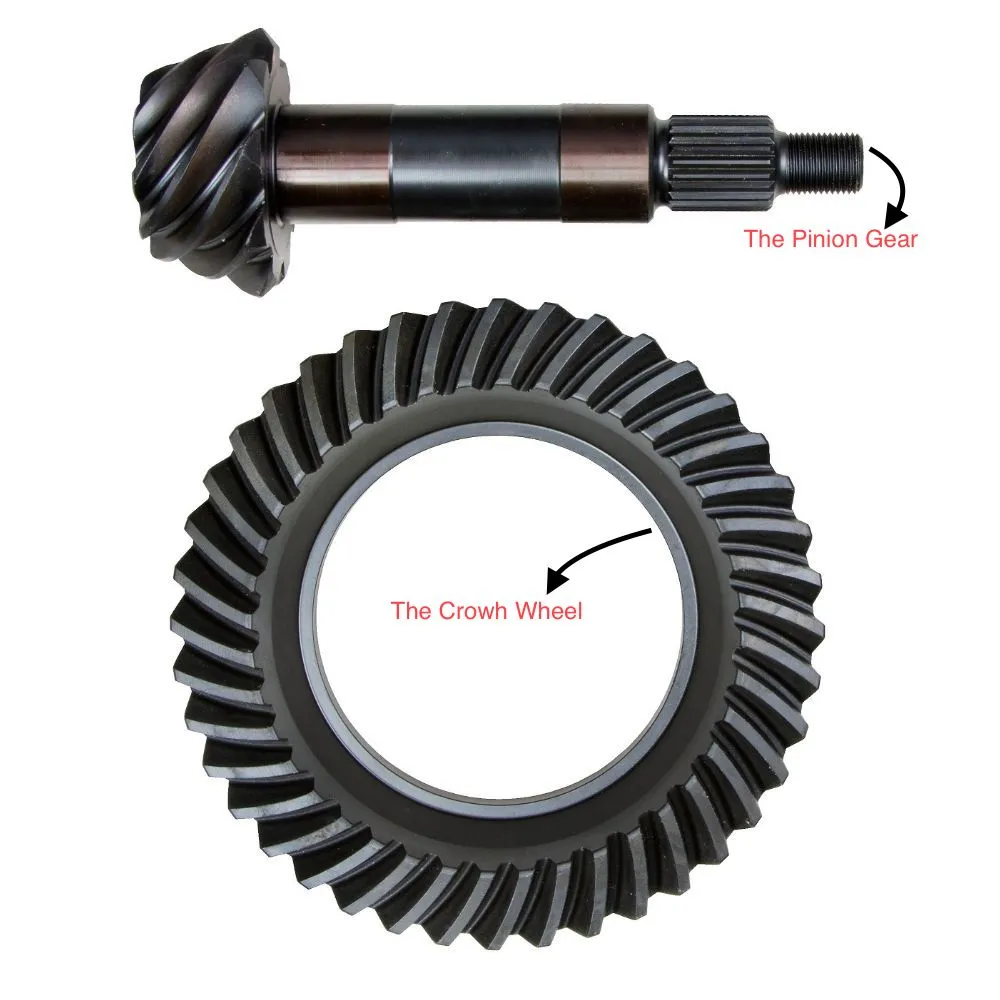
In an automotive drivetrain, the ring and pinion gear set is one of the most critical components inside the differential’s final drive system. It transfers power from the driveshaft to the differential carrier while also changing the direction of power flow and providing the final gear reduction.
In technical discussions, two gear types are often mentioned when referring to ring and pinion sets:
- Spiral Bevel Gears
- Hypoid Gears
This raises a common question among mechanics, engineers, and automotive parts buyers:
Are the ring and pinion gears used in modern vehicles spiral bevel gears or hypoid gears?
The answer is that most modern automotive differentials use hypoid gears, while spiral bevel gears were more common in earlier designs or are still used in certain industrial applications.
To understand why, we need to examine the structural differences between these two gear types.
What is a Spiral Bevel Gear?
A spiral bevel gear is a type of bevel gear where the teeth are curved and cut along a spiral pattern. This design improves the smoothness of engagement compared to straight bevel gears.
The most important structural characteristic of spiral bevel gears is that:
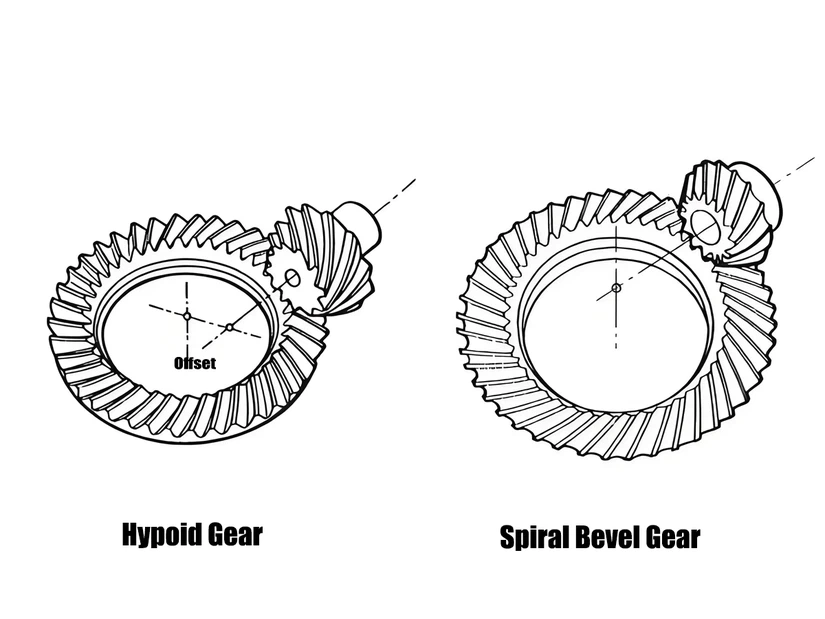
The axis of the pinion gear intersects with the axis of the ring gear.
This means both shafts meet at a single point in space, typically forming a 90-degree angle.
Because of this geometry, spiral bevel gears provide:
- Smooth power transmission
- Relatively high efficiency
- Lower vibration compared to straight bevel gears
They are still widely used in many mechanical systems such as:
- Industrial gear drives
- Machine tools
- Marine transmissions
- Certain mechanical power systems
What is a Hypoid Gear?
A hypoid gear is an advanced variation of the spiral bevel gear. The main difference lies in the relative position of the gear shafts.
In a hypoid gear set:
The pinion axis does not intersect the ring gear axis. Instead, the pinion is offset from the centerline of the ring gear.
This means the two shafts are non-intersecting and offset, creating a geometry similar to a hyperboloid surface, which is where the name “hypoid” originates.
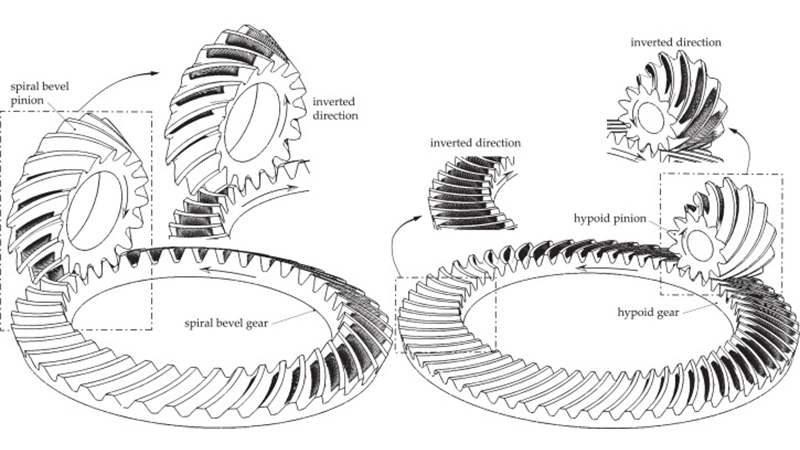
Spiral Bevel Gear Structure
As shown in the diagram:
- The pinion shaft and ring gear shaft intersect
- Both gears form a conical geometry
- The tooth contact moves gradually across the gear surface during rotation
While spiral bevel gears provide smooth transmission, engineers later developed an improved design better suited for automotive drivetrains: the hypoid gear.
Hypoid Gear Structure
In most automotive designs:
- The pinion gear is positioned below the centerline of the ring gear
- The tooth contact path becomes longer
- Sliding motion between the teeth increases
Although this increases friction slightly, it provides several important advantages for vehicle drivetrain design.
Advantages of Hypoid Ring and Pinion Gears
Higher Load Carrying Capacity
Because the contact area between the gear teeth is larger, hypoid gears can handle greater torque loads than spiral bevel gears.
This makes them ideal for vehicles that experience high drivetrain stress, such as:
- Pickup trucks
- Off-road vehicles
- SUVs
- Light-duty trucks
Smoother and Quieter Operation
Hypoid gears operate with a combination of rolling and sliding contact. This type of engagement allows for smoother power transfer and reduces vibration.
As a result:
- Noise levels are lower
- Gear engagement is smoother
- Overall drivetrain refinement improves
This characteristic is particularly important in modern passenger vehicles where NVH (Noise, Vibration, and Harshness) control is a key design factor.
More Flexible Vehicle Packaging
One of the most important advantages of hypoid gears is related to vehicle design and packaging.
Because the pinion gear is offset downward, the driveshaft can be positioned lower in the chassis.
This provides several benefits:
- Lower vehicle floor height
- Improved cabin space
- Lower center of gravity
- Better overall vehicle layout
For this reason, starting from the 1930s, most automotive manufacturers gradually adopted hypoid gear differentials.
Performance Comparison
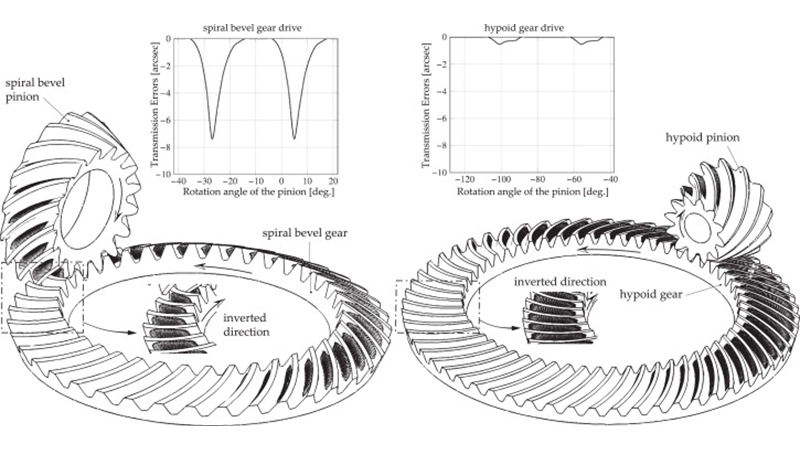
Engineering tests comparing spiral bevel and hypoid gear drives show that:
- Hypoid gears typically provide more stable transmission behavior
- Tooth engagement tends to be smoother
- Torque transfer can be handled more effectively under load
These performance advantages explain why hypoid gears became the standard design for automotive final drive systems.
Conclusion
From a mechanical design perspective, ring and pinion gear sets can generally be categorized into two main types:
- Spiral Bevel Gears
- Hypoid Gears
While spiral bevel gears were used in earlier automotive designs, hypoid gears have become the dominant solution in modern vehicles due to their higher load capacity, smoother operation, and improved drivetrain layout flexibility.
Today, nearly all automotive differentials utilize hypoid ring and pinion gear sets as part of the final drive system.