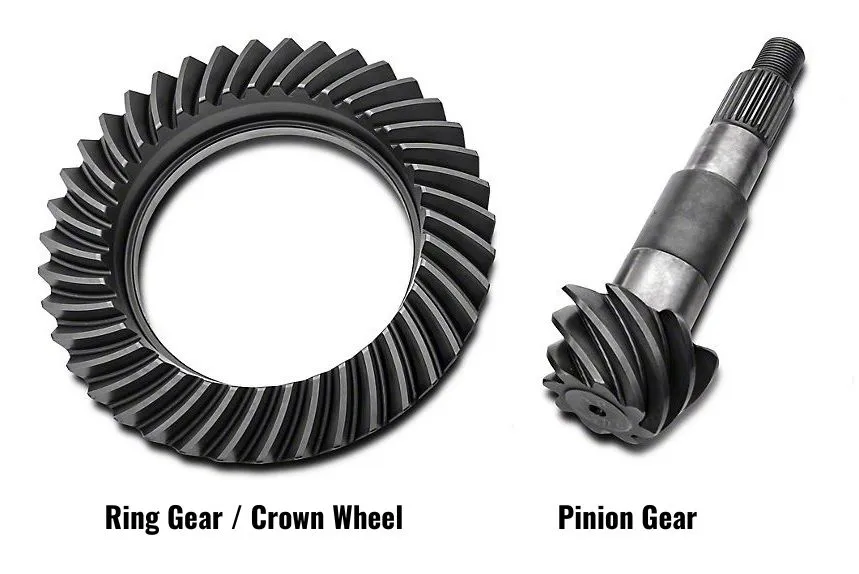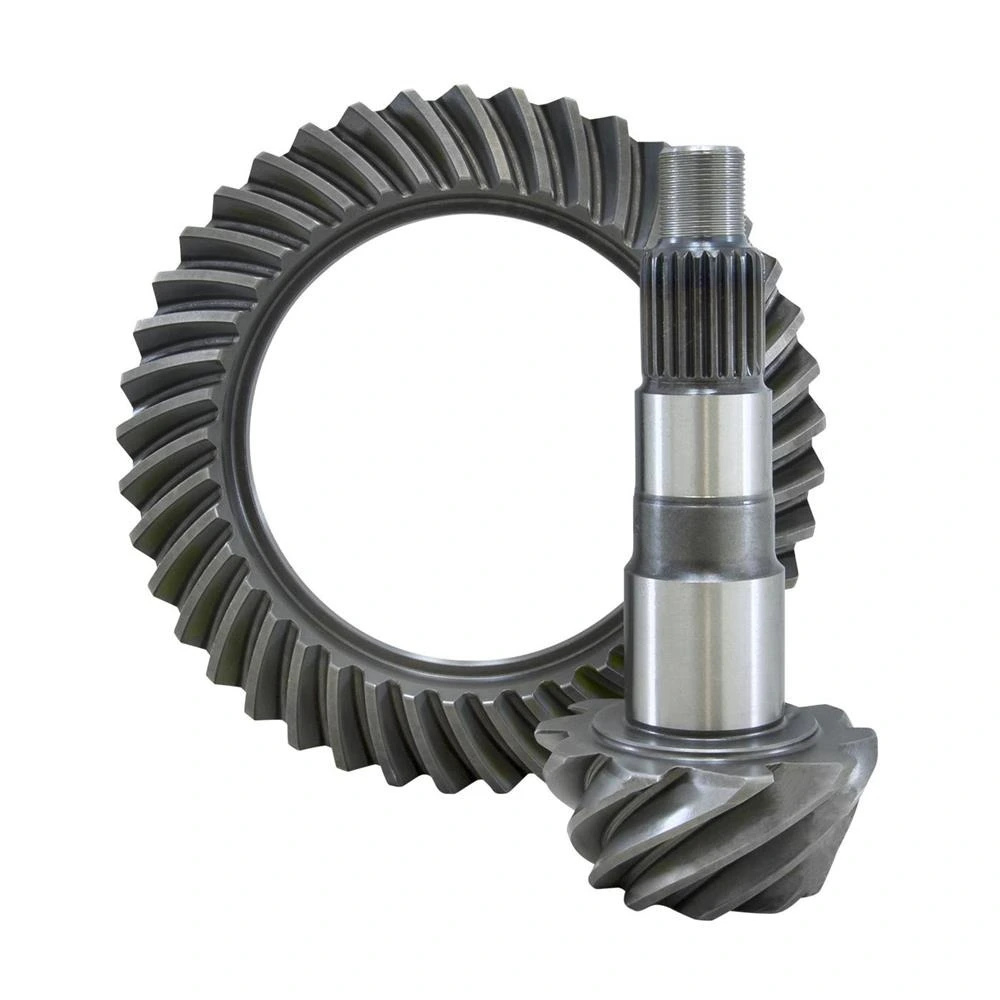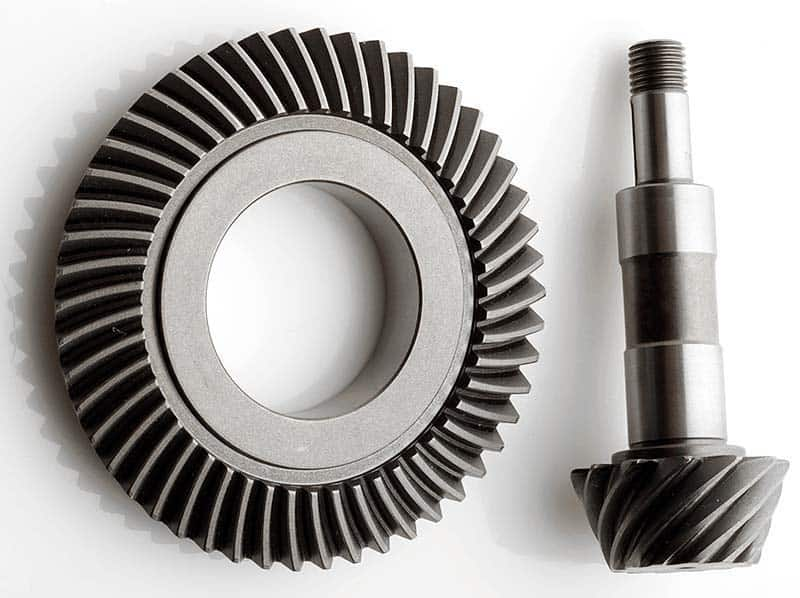
This article explores the mechanical necessity of re-gearing, the science behind gear ratios, and why high-quality gear sets are the most critical investment you can make for a modified 4WD.
The Physics of Rotation and Gear Ratios
The Leverage Problem
When you increase tyre size without changing your crown wheel and pinion ratio, you effectively “lengthen” your gearing. This results in:
- Loss of Torque: The vehicle feels sluggish off the mark.
- Transmission Strain: Automatic transmissions will “hunt” for gears, shifting up and down constantly as they struggle to stay in the engine’s power band.
- Increased EGTs: In diesel engines common in Australia, such as the Toyota LandCruiser or Hilux, lugging the engine with oversized tyres leads to higher Exhaust Gas Temperatures (EGTs), which can cause long-term engine damage.
The Solution: Re-Gearing the Differential
Re-gearing is the process of replacing the factory crown wheel and pinion with a set that has a higher numerical ratio (shorter gears). For example, swapping a factory 3.73 ratio for a 4.11 or 4.56 ratio. This modification compensates for the larger tyre diameter, allowing the engine to return to its optimal RPM range at cruising speeds and providing the mechanical advantage needed to turn heavy 35-inch rubber.
Finding the Correct Gear Ratio for Your Vehicle
The Calculation
For Ford Ranger or Nissan Patrol moving from a 30-inch tyre to a 35-inch tyre, the difference is roughly 16%. To maintain factory performance, the gear ratio should ideally be increased by a similar margin.
Application-Specific Ratios
- Touring and Daily Driving: If the vehicle spends 90% of its time on the bitumen but needs to handle weekend tracks, a moderate increase (e.g., 3.7 to 4.11) is usually sufficient.
- Heavy Towing and Rock Crawling: For those towing heavy caravans through the Victorian High Country or tackling vertical climbs, an even shorter ratio (e.g., 4.3 or 4.56) provides the “crawl ratio” necessary for controlled, low-speed technical driving without burning out the clutch or torque converter.
The Anatomy of a High-Quality Crown Wheel and Pinion
1. Material Selection: The 20CrMnTi Advantage
2. The Forging Process
Gears can be cut from billet or forged. Forged gears are vastly superior for automotive use. The forging process aligns the grain structure of the metal to the shape of the gear tooth, providing significantly higher resistance to “shock loading”—the kind of stress experienced when a spinning tyre suddenly catches grip on a rock ledge.
3. Heat Treatment and Carburizing
To withstand the immense pressure at the point of contact between the pinion and the crown wheel, the gears must undergo carburizing. This process hardens the “skin” of the teeth to a specific depth (the case depth), ensuring wear resistance, while the center of the tooth remains slightly flexible to prevent snapping under load.
4. Precision Lapping
In the heat of an Australian summer, differential oil temperatures can soar. If the crown wheel and pinion are not perfectly mated, friction increases, leading to oil breakdown and gear “howling.” Quality manufacturers perform a precision lapping process, where the two gears are run together with an abrasive paste to ensure a 100% perfect contact pattern.
Installation and Technical Setup
Setting the Backlash
Pinion Depth and Preload
Why Australian 4WD Owners Prioritize Gear Upgrades
The Australian market is unique. We drive longer distances, carry heavier loads (bull bars, winches, drawers, and long-range tanks), and face higher ambient temperatures than almost anywhere else on earth.
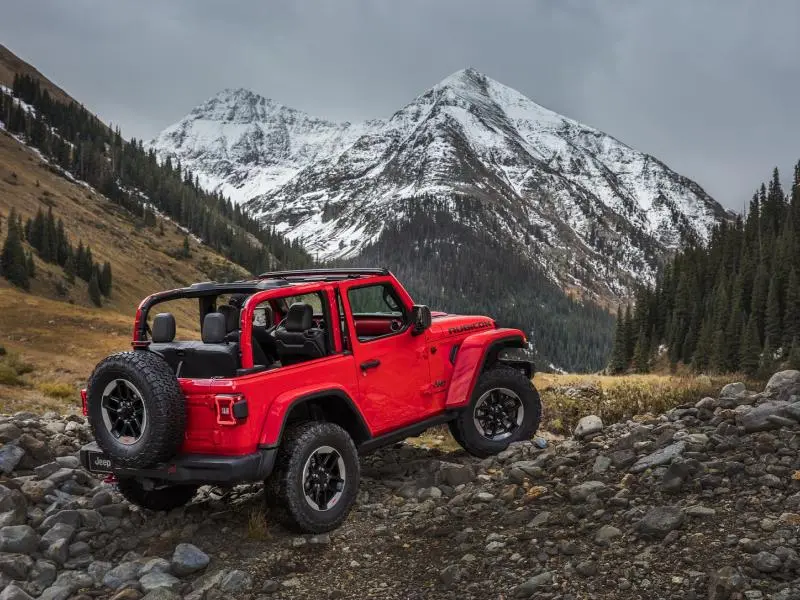
When you add 35-inch tyres to a loaded-up LandCruiser 79 Series or a Hilux, you are asking the drivetrain to move a massive amount of weight. Re-gearing isn’t just about “getting your power back”; it is about thermal management. By returning the engine and transmission to their intended operating RPMs, you reduce the heat generated by the torque converter and the engine’s cooling system. This leads to a more reliable vehicle that is less likely to overheat when climbing a soft sand dune in the Simpson Desert.
Furthermore, for manual 4WDs, a new crown wheel and pinion set saves your clutch. With a factory ratio and 35-inch tyres, the “first gear” becomes too tall, forcing the driver to slip the clutch excessively to get moving on an incline. A gear swap restores that low-end “grunt,” allowing the vehicle to crawl forward at idle speed.
Sourcing Your Crown Wheel and Pinion
Because the crown wheel and pinion are internal components, many owners are tempted to save money by purchasing unbranded or “budget” gear sets. This is a high-risk strategy. The labor cost to install a gear set often equals or exceeds the cost of the parts themselves. If a cheap gear set fails, you pay the labor twice, not to mention the potential cost of a tow from a remote location.
Choosing a factory-direct manufacturer ensures that you are getting components designed for the stresses of modern automotive travel. When sourcing gears, look for suppliers that provide matched sets, utilize high-grade forging, and maintain strict quality control over the heat-treatment process.
At XJXPARTS, we are not just a supplier; we are a dedicated factory specializing in high-performance automotive gear solutions. We understand the rigorous demands placed on 4WD drivetrains, particularly in environments as challenging as the Australian Outback. Our crown wheel and pinion sets are engineered using premium materials and precision manufacturing techniques to ensure they can handle the increased torque and heat of modified vehicles.
Whether you are a workshop looking for a reliable wholesale partner or an enthusiast preparing for your next big expedition, our team provides the technical expertise and manufacturing consistency you need to stay on the move. We pride ourselves on delivering OEM-quality gear sets that provide quiet operation and unmatched durability.
Ready to restore the performance of your 4WD? Contact us at XJXPARTS today to discuss your specific vehicle requirements, gear ratio options, or custom manufacturing needs. Our engineering team is standing by to help you choose the perfect crown wheel and pinion for your project.