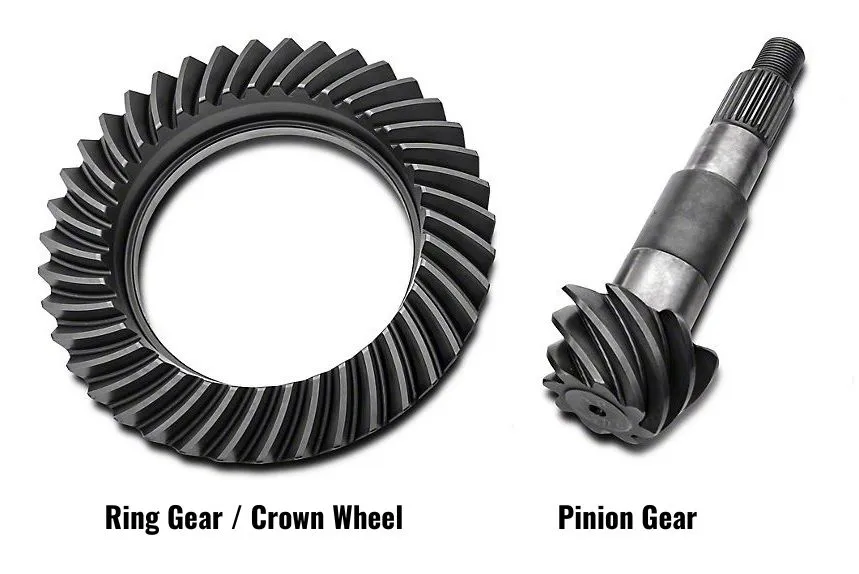
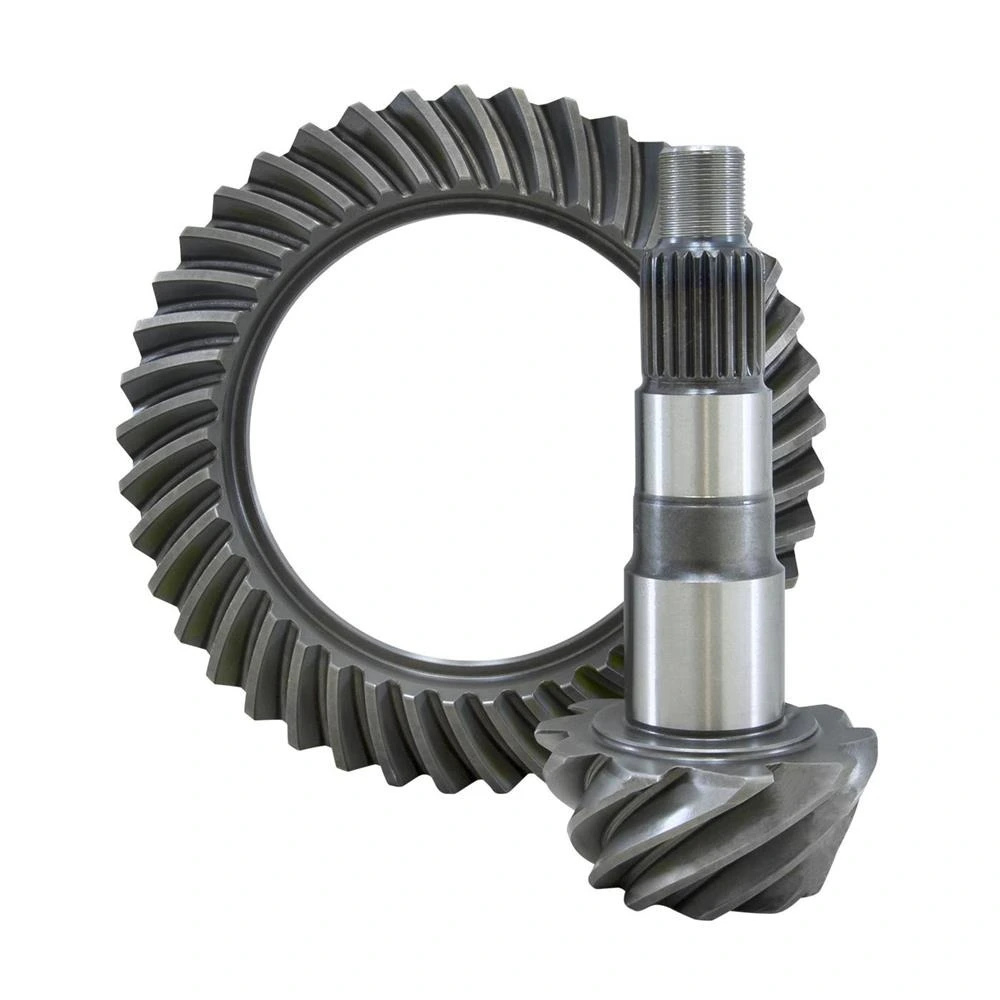
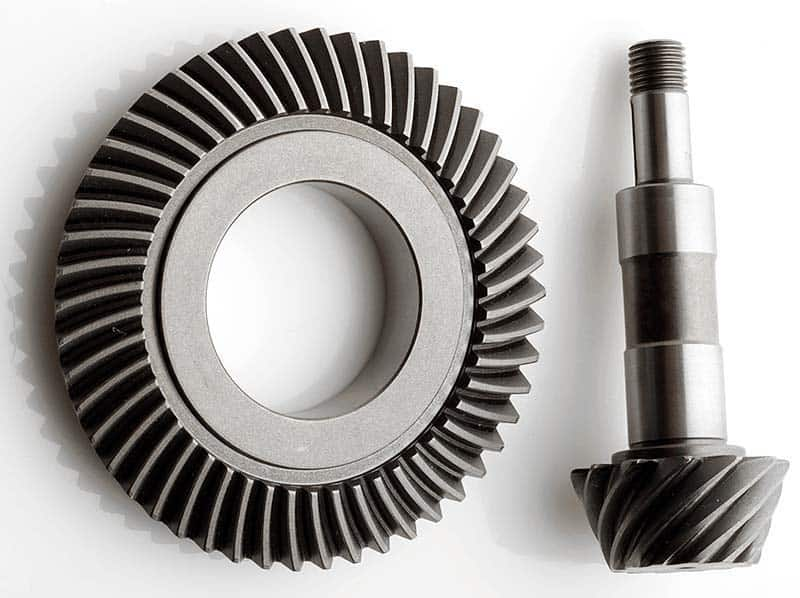
In the intricate world of automotive engineering, different types of gear sets play a crucial role in determining a vehicle’s performance, efficiency, and durability. Among these, the bevel gear set – often referred to as “hunting gear,” “non-hunting gear,” and “partial hunting gear”- are essential components in a car’s differential. This article explores these gear types, their applications, and the specific types of vehicles that utilize them.

How to Determine Your Gear Type?
The classification of these gear sets is determined by the tooth count ratio between the ring gear and the pinion gear. Understanding this mathematical relationship is key to choosing the right setup for your vehicle.
- Non-Hunting: The ring gear tooth count is a perfect multiple of the pinion tooth count (e.g., 30/10 = 3.00).
- Hunting: The tooth counts are prime to each other (e.g., 41/11 = 3.73), ensuring every pinion tooth eventually touches every ring gear tooth.
- Partial Hunting: The pinion teeth contact the same group of ring gear teeth, but not all of them.
Want to find your exact ratio? Use our Differential Gear Ratio Calculator to quickly analyze your setup.
Hunting Gear Set
A hunting gear set is designed so that any one pinion gear tooth comes into contact with all the ring gear teeth over several revolutions. This ensures that each tooth on both gears experiences uniform wear, leading to longer-lasting performance and smoother operation. The even distribution of contact reduces vibration and noise, enhancing the overall driving experience.
- Application in Daily Vehicles
Most everyday passenger cars use hunting gear sets in their differentials. The primary reason for this choice is the balance it offers between durability, smooth operation, and noise reduction. Cars designed for regular commuting, family use, and general transportation benefit greatly from the hunting gear set’s characteristics.
Non-Hunting Gear Set
In a non-hunting gear set, any one pinion gear tooth repeatedly contacts the same ring gear tooth or teeth within one revolution. This type of gear set tends to concentrate wear on specific teeth, potentially leading to increased wear and tear. However, it is simpler in design and may be more cost-effective to manufacture.
- Application in Certain Commercial Vehicles
Non-hunting gear sets are often found in vehicles where cost-effectiveness and simplicity are prioritized over high performance and noise reduction. Examples include certain commercial vehicles like trucks or buses, especially those where the primary focus is on durability and carrying heavy loads rather than high-speed performance. Additionally, older vehicles or those designed for lower speeds may employ non-hunting gear sets due to their straightforward design and lower production costs.
⚠️Technical Note for Mechanics
Unlike hunting gear sets, Non-Hunting and Partial Hunting gears require precise synchronization. Because specific teeth are “mated” during the initial break-in period, you must mark the gear teeth before disassembly. Failing to realign the original timing marks during reinstallation will lead to excessive noise, vibration, and premature gear failure.
Partial Hunting Gear Set
Partial hunting gear sets represent a middle ground between the two extremes. In this configuration, any one pinion tooth contacts a subset of the ring gear teeth, and this subset changes with each revolution. More than one revolution of the ring gear is needed to cover all possible tooth combinations, distributing wear more evenly than a non-hunting gear set but not as uniformly as a hunting gear set.
- Application in Specialized Vehicles
Off-Road Vehicles
SUVs and trucks designed for off-road use often utilize partial hunting gear sets. These vehicles need a balance of durability and performance to handle rough terrain and varying loads. The partial hunting gear set provides the necessary robustness and adaptability required for off-road driving conditions.
High-Performance Racing Cars
In the world of high-performance and racing cars, partial hunting gear sets can be beneficial. These vehicles demand gears that can withstand high stresses and provide reliable performance at high speeds. The partial distribution of wear ensures that the gears do not fail under the extreme conditions often encountered in racing.
| Feature | Hunting Gear | Partial Hunting | Non-Hunting |
|---|---|---|---|
|
Wear Distribution |
Perfectly Uniform |
Distributed in Groups |
Concentrated |
|
NVH (Noise/Vibration) |
Best (Self-quieting) |
Good |
Moderate |
|
Setup Difficulty |
Easy (No timing marks) |
High (Requires timing) |
High (Requires timing) |
|
Best For |
Daily Drivers & SUVs |
Off-Road & Racing |
Heavy Duty/Commercial |
Conclusion
The choice of gear set in an automotive differential is dictated by the specific needs and design goals of the vehicle. While hunting gear sets are prevalent in most passenger cars due to their balanced performance and durability, non-hunting gear sets serve well in cost-sensitive commercial applications. Partial hunting gear sets offer a compromise that is ideal for off-road and high-performance vehicles, where both robustness and reliability are paramount. Understanding these gear types helps in appreciating the engineering decisions behind different vehicles and the continuous efforts to enhance their performance and longevity.