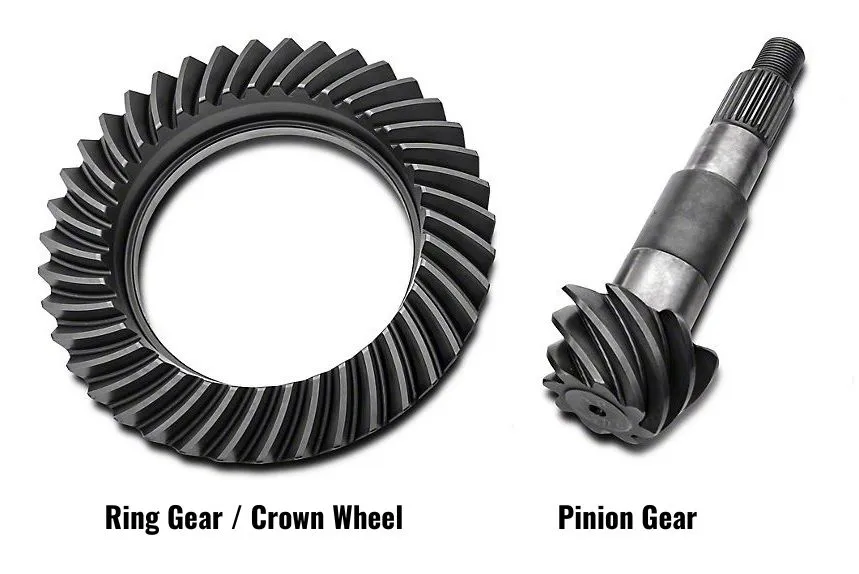
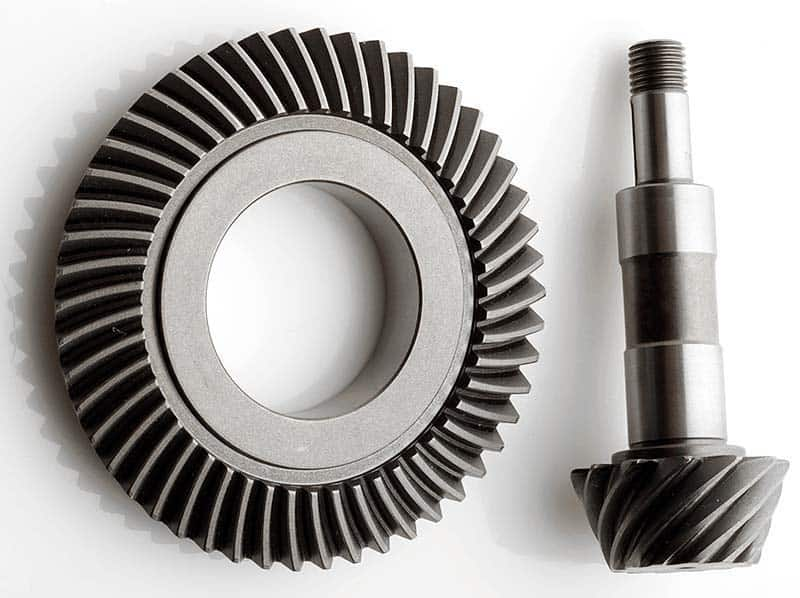
If you search “Dana 44 ring and pinion” right now, you’ll find page after page of product listings. Ratios, part numbers, prices — but very little that actually helps you figure out which gear set you need, or why.
This guide is here to fix that.
Whether you’re re-gearing after a lift and tire upgrade, rebuilding a worn differential, or building a dedicated trail rig, the decisions you make here will directly affect how your truck drives on the road, how it performs off-road, and how long your drivetrain lasts. Get it right once.
What Is the Dana 44 and Why Does It Matter?
Understanding Gear Ratios: The Single Most Important Decision
Higher number = more torque, lower top speed efficiency. Lower number = less torque multiplication, better highway cruising.
Why Tire Size Changes Everything
Re-gearing compensates for the larger tires by restoring the engine’s operating efficiency. The goal is to match your new tire size to a gear ratio that keeps your RPM in a comfortable range at highway speeds and gives you the low-end torque you need for off-road use.
General Tire-to-Ratio Guidelines for the Dana 44
| Tire Size | Recommended Ratio Range | Notes |
|---|---|---|
|
31"–33" |
3.73:1 – 4.10:1 |
Good street/trail balance |
|
33"–35" |
4.10:1 – 4.56:1 |
Compensates for added rotating mass |
|
35"–37" |
4.56:1 – 4.88:1 |
Better low-end power, some highway RPM increase |
|
37"+ |
4.88:1 – 5.13:1 |
Aggressive off-road builds; verify axle rating |
These are starting points, not fixed rules. Your transmission’s internal gear ratios, transfer case crawl ratio, engine characteristics, and how you primarily use the vehicle all influence the ideal final number. If you want to run through the numbers before committing, use our Gear Ratio Calculator — plug in your current ratio, new tire size, and transmission details to see exactly what ratio you should be targeting.
Standard Rotation vs. Reverse Rotation: What's the Difference?
Standard Rotation (Low Pinion)
Most Dana 44 axles use standard rotation gears. In a standard rotation axle, the pinion gear enters the differential housing below the axle centerline. This is often called a “low pinion” configuration.
Standard rotation Dana 44 axles are found in the rear of most trucks and SUVs, and in the front of many early Jeeps (including CJ models) and older Ford and GM trucks.
Reverse Rotation (High Pinion)
Some Dana 44 front axles use reverse rotation gears, where the pinion enters above the axle centerline — a “high pinion” configuration.
The high pinion design offers a stronger driveshaft angle for front axle applications and provides better ground clearance for the differential housing. Because of the different mesh geometry, these axles require reverse-cut ring and pinion gears that rotate in the opposite direction.
- Ford F-150 and Bronco high pinion front axles
- Some Ford Super Duty front applications
- Jeep JK Rubicon front axle (which also has unique ring gear bolt specifications)
How to Identify What You Have
Ready to get a quote? Browse our full selection of Dana 44 Standard & Reverse Rotation Ring and Pinion Gears — available in multiple ratios, precision-manufactured for both standard and high pinion applications.
The Dana 44 Carrier Break: A Critical Detail Most Buyers Miss
- Differentials originally built for 3.73:1 and numerically lower ratios (3.55, 3.07, etc.) use one carrier size.
- Differentials built for 3.92:1 and numerically higher ratios (4.10, 4.56, 4.88, etc.) use a different carrier size.
These two carrier sizes are not interchangeable.
What This Means for Your Build
Scenario A: Your truck came with 3.55:1 gears and you want to upgrade to 4.10:1. Because 3.55 and 4.10 sit on opposite sides of the carrier break, you cannot simply swap the ring and pinion — you’ll also need to replace the carrier (differential case). Budget and plan for this accordingly.
Scenario B: Your truck came with 3.73:1 gears and you want to run 4.10:1. There is a solution called “thick cut” gears — a numerically higher ring and pinion set machined with a thicker ring gear profile that allows it to mesh correctly with the 3.73-and-lower carrier. This lets you run a higher ratio without buying a new carrier.
Scenario C: You’re going from 4.10:1 to 4.88:1. Both ratios sit on the same (high ratio) side of the carrier break. A direct gear swap works — no new carrier needed.
When you contact a supplier about Dana 44 gears, this is one of the first questions they should ask you.
Standard Rotation vs. Reverse Rotation: Vehicle Application Reference
Standard Rotation Dana 44 Applications
| Vehicle | Years | Position |
|---|---|---|
|
Jeep Wrangler YJ |
1987–1995 |
Rear |
|
Jeep Wrangler TJ |
1997–2006 |
Rear |
|
Jeep CJ (various) |
Various |
Front & Rear |
|
Chevrolet K-Series |
Various |
Front & Rear |
|
Dodge W-Series |
Various |
Rear |
|
Ford F-150 (low pinion) |
Various |
Rear |
Reverse Rotation (High Pinion) Dana 44 Applications
| Vehicle | Years | Position |
|---|---|---|
|
Ford Bronco |
1980–1996 |
Front |
|
Ford F-150 (high pinion) |
1980–1997 |
Front |
|
Jeep Wrangler JK Rubicon |
2007–2018 |
Front |
|
Ford Super Duty |
Various |
Front |
Note: The Jeep JK Rubicon uses reverse rotation gears with different ring gear bolt specifications (1/2″ bolts vs. 3/8″). Always verify the exact application before ordering.
This list is representative, not exhaustive. Axle configurations can vary by production year and trim level. Always confirm your specific axle by vehicle identification or by consulting a knowledgeable supplier before ordering.
What to Look for in a Dana 44 Ring and Pinion Set
Material and Manufacturing Process
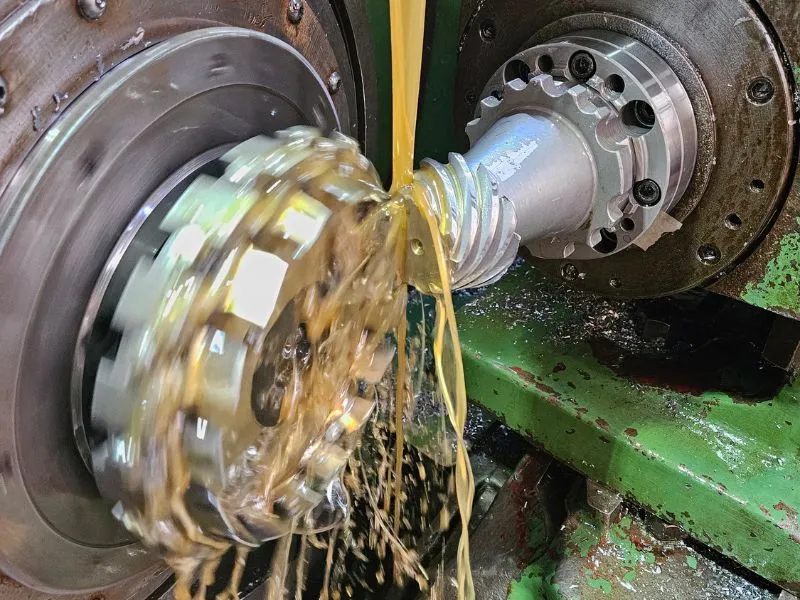
Quality ring and pinion sets for the Dana 44 are machined from high-grade alloy steel, then heat-treated to achieve the hardness and toughness needed to survive sustained torque loads. The gear teeth should be cut using a precision face milling or five-cut process that produces consistent tooth geometry and a square contact pattern across the drive and coast faces.
Inferior gears may be softer, less precisely cut, or have surface inconsistencies that show up as noise, accelerated wear, or premature failure — especially under load.
OEM vs. Aftermarket
Genuine Dana Spicer gears are manufactured to original equipment specifications and are the benchmark for fitment and durability. Quality aftermarket manufacturers produce gear sets to OEM or above-OEM specifications using similar materials and processes — often at competitive price points and with broader ratio availability than the OEM catalog.
For most performance and off-road applications, a quality aftermarket set is a sound choice. For stock replacement on a daily driver, OEM equivalents provide a known baseline.
What's Included
A ring and pinion set includes the ring gear and pinion gear. It does not typically include the install kit (shims, crush sleeve, bearings, seals, and gaskets needed for the differential assembly). If you’re doing a full rebuild or first-time ratio change, budget for the install kit separately — skipping it to save money almost always costs more in labor later.
Installation: What You Need to Know
- Setting pinion depth (the precise position of the pinion gear relative to the ring gear)
- Setting backlash (the measured clearance between the ring and pinion gear teeth)
- Checking and verifying the contact pattern using gear marking compound
- Correct pinion bearing preload
Break-In Procedure
Frequently Asked Questions
Dana 44 gears are not universally interchangeable. The ring gear diameter (8.5″ standard, or 8.89″ for some JK applications), bolt pattern, and rotation direction must all match your axle. Always specify your exact application when ordering.
Source Reliable Dana 44 Gear Sets for Your Market
- Standard & Reverse Rotation Options
- Popular Ratios for Off-Road & Performance Markets
- Stable Production Capacity for Bulk Orders
- OEM & Private Label Support Available
Browse Dana 44 Standard & Reverse Rotation Ring and Pinion Gears →
For distributors, wholesalers, and automotive parts buyers who need to confirm specifications such as ratio selection, rotation type, or application matching — our team provides technical support to streamline your sourcing process and reduce ordering risk.
Contact us today to discuss your requirements, request a quotation, or evaluate long-term supply cooperation.